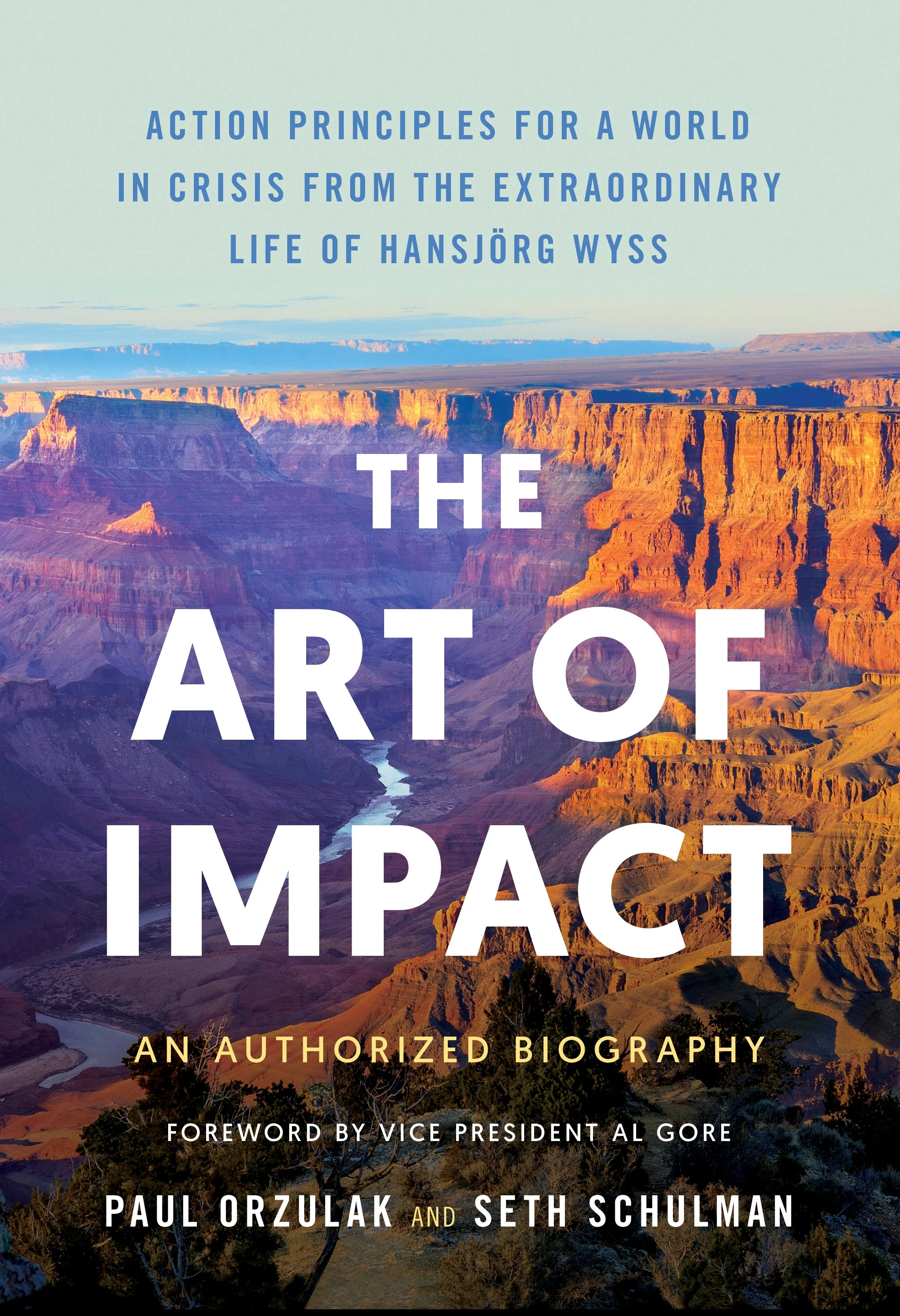
The Art of Impact Book Excerpt:
Where Loving A Place Will Lead You
Driving progress and empowering people to fight for what is theirs.
Turning Affection into Action
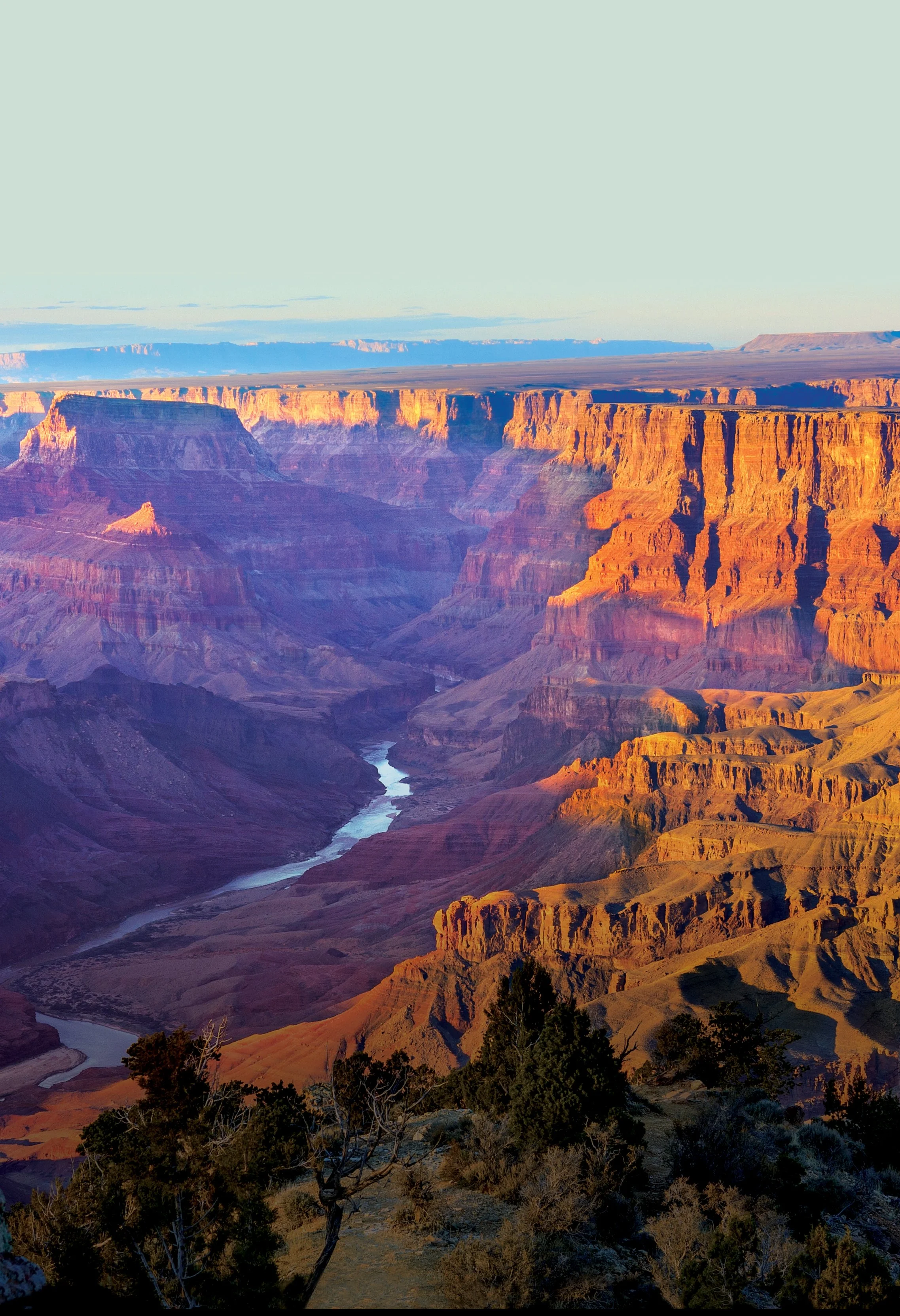
The Grand Canyon is part of the Colorado Plateau region of the United States, straddling portions of Colorado, Utah, Arizona, and New Mexico. Wyss first encountered portions of this region in Colorado during his initial visit to the United States in 1958. During the 1980s, as he was working to build Synthes into a fast-growing medical device company, he became involved with the Southern Utah Wilderness Alliance—which has defended Utah’s historic desert wildlands from oil and gas exploration and other threats since 1983—and hiked throughout southern Utah with people he met through the organization. By the late 1980s, he had joined the board of another regional conservation group, the Grand Canyon Trust, which has worked since 1985 to protect both the land and the rights of the area’s Native peoples, and had begun exploring the Grand Canyon with his hiking buddies.
One of the Grand Canyon Trust board members was John Leshy, former solicitor for the US Department of the Interior. He traces Wyss’s global conservation efforts in recent decades back to his love for this region and its breathtaking, unspoiled natural landscapes. The sheer size of these landscapes evidently made quite an impression on Wyss. As he told National Geographic in 2019, “You just can’t believe, when you come from a country that is only 2,400 square miles, and you see these places, and you see the sky changing. It’s just unbelievable.” Leshy surmises that the Colorado Plateau also attracted Wyss because unlike in Switzerland, “there are large swaths of no obvious signs of human habitation—no mining, no logging, no hydroelectric dams, et cetera—I think that really appealed to him.”
Another aspect of the Colorado Plateau also attracted Wyss, so much so that it would profoundly shape his future philanthropy: These were vast public lands, protected by the federal government to remain open and accessible to all. Wyss believes strongly that enjoyment of nature shouldn’t be just for wealthy private landowners—it should be for everyone. As President Theodore Roosevelt put it at the turn of the twentieth century, after establishing several national parks that helped lay the groundwork for America’s National Park System, “Our people should see to it that they are preserved for their children and their children’s children forever, with their majestic beauty all unmarred.”
Thinking back to his childhood, Wyss recalls that he and his family were able to enjoy nature wherever they wished because Swiss law dating from medieval times allowed all citizens to access natural lands even when they were privately owned. Although some restrictions on hunting were in place, anyone could walk through private forests or fields to forage for mushrooms, collect fallen branches for use as firewood, or simply enjoy a bit of serenity. In the United States, by contrast, property rights are more stringent and exclusive, giving rise to the familiar No Trespassing signs. Fortunately, huge portions of land are still publicly owned and managed. Anyone who wishes can enter them and enjoy their wild, unspoiled beauty.
Wyss’s hiking trips in the Colorado Plateau during the 1980s and early 1990s left him with a strong desire to protect the public lands he treasured and to keep them wild for future generations. Then as now, the pristine character of this land was under threat, whether from recreational vehicles or from the desire of commercial interests to use the land for mining, grazing, or fossil fuel extraction. Meanwhile, suburbs were expanding into private lands that had formerly been fields or woods, leaving millions of people without easy access to nature. Wyss felt it his duty as a human being to conserve these places for others to enjoy. And thanks to the success of Synthes, he now had the means to support groups fighting to manage public land properly and conserve it as wilderness.
“Somebody needs to do it,” he says when asked about his core motivation as a conservationist. “Simple as that. Somebody needs to conserve beautiful places...”
Excerpt from "Chapter Six: Where Loving A Place Will Lead You" in The Art of Impact
© 2025 Paul Orzulak and Seth Schulman
Read more from The Art of Impact
Find a retailer below: